Open source 3D printers provide users with flexibility, customization, and community support, making them ideal for beginners, educators, and DIY enthusiasts. This article features a curated selection of best open source 3D printers available on Amazon, focusing on reliability, ease of use, and advanced features like resume printing, auto bed leveling, and WiFi connectivity.
| Product | Brand | Build Volume | Key Features | Link |
|---|---|---|---|---|
| Official Creality Ender 3 3D Printer | Comgrow | 8.66 x 8.66 x 9.84 in | Resume printing, advanced extruder, noiseless movement | View on Amazon |
| Longer LK5 Pro 3 3D Printer | Longer | 11.8 x 11.8 x 15.7 in | Stable triangular frame, 180mm/s speed, high precision | View on Amazon |
| TINA2S 3D Printer with WiFi Printing | WEEDO | Compact / Desktop Size | WiFi cloud printing, auto leveling, fully assembled | View on Amazon |
| Upgraded Tina2S 3D Printer by HEPHI3D | HEPHI3D | Compact / Desktop Size | WiFi cloud printing, fully open source, silent printing | View on Amazon |
| Sovol SV06 3D Printer | Sovol | 8.66 x 8.66 x 9.84 in | All metal hotend, direct drive extruder, auto leveling | View on Amazon |
Official Creality Ender 3 3D Printer Fully Open Source
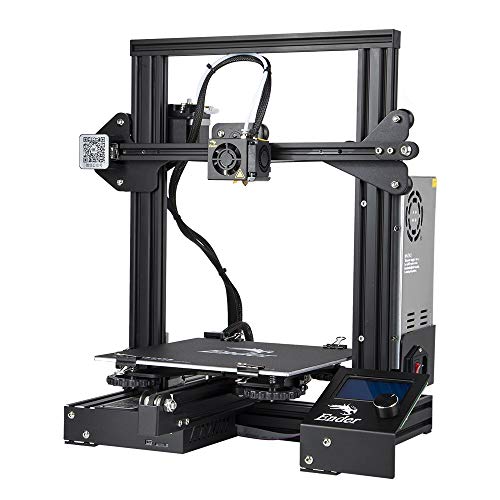
The Official Creality Ender 3 offers a DIY learning platform with an open-source design, making it ideal for students and beginners developing hands-on skills. Its resume printing function provides peace of mind during power outages by allowing the print to continue from where it left off. The printer features an advanced extruder technology that significantly reduces plugging risks and improves extrusion accuracy. With partially assembled parts, users can build the printer in about two hours and experience smooth and noiseless operation due to the V-shape POM wheels.
Longer LK5 Pro 3 Large Build Size 3D Printer

The Longer LK5 Pro 3 stands out for its stable triangular frame, which enhances printing precision by minimizing resonance-related errors. Its substantial build volume of 11.8 x 11.8 x 15.7 inches supports larger-scale projects and diverse printing materials. The printer boasts fast printing speeds up to 180mm/s and a precision of 0.1mm, thanks to X and Y-axis automatic calibration technology. It arrives 95% pre-assembled, making it friendly for beginners looking for ease and quality.
TINA2S 3D Printer with WiFi Printing by WEEDO

The WEEDO TINA2S is a fully assembled, beginner-friendly 3D printer featuring automatic bed leveling and ultra-quiet operation, suitable for home, classroom, or office environments. It supports WiFi cloud printing via the Poloprint Cloud App, compatible with smartphones and tablets using 2.4GHz networks. The ease of use, combined with smart control software compatible across Windows, Mac, and Linux, makes it an excellent choice for users wanting simplicity and wireless convenience.
Upgraded Tina2S 3D Printer by HEPHI3D with Open Source Compatibility

The HEPHI3D Upgraded Tina2S is a compact, fully open source 3D printer optimized for beginners and educational use. Equipped with a self-developed Poloprint Cloud APP, users can perform intelligent WiFi printing with one-click slicing. It supports popular slicing software like Cura and PrusaSlicer. This silent printer operates between 40-50dB, delivers speeds up to 200mm/s, and offers flexible USB and wireless connectivity options for enhanced user control.
Sovol SV06 3D Printer with All Metal Hotend

The Sovol SV06 merges industrial i3 structural design with home-friendly modular assembly. It upgrades printing speed from 50mm/s to 150mm/s through firmware updates. Its all metal hotend supports temperatures up to 300°C, broadening the range of printable materials without PTFE tube replacements. The planetary dual gear direct drive extruder improves extrusion precision and reduces motor load. Additionally, a 25-point auto-leveling system and PEI build plate ensure hassle-free, smooth printing results.
Buying Guide for Open Source 3D Printers
When selecting a 3D printer that features a fully open source framework, consider the following key factors to ensure it meets your needs and skill level.
Build Volume
The print area size determines the maximum dimension of objects you can create. Larger volumes suit diverse projects but may require more space and longer print times. Choose according to your typical print size requirements.
Assembly and User-Friendliness
Some open source printers come fully assembled and ready to use, ideal for beginners or users needing quick setup. Others require partial or full assembly, offering learning opportunities but demanding technical skills.
Print Quality and Speed
Precision, layer height, and speed are critical for output quality and project turnaround. Look for printers offering precise extrusion, smooth mechanics, and firmware that supports high-speed printing without compromising accuracy.
Extruder and Hotend Type
Direct drive extruders offer better control for flexible filaments, while Bowden extruders may reduce moving weight. All-metal hotends allow higher temperature printing, expanding material compatibility.
Connectivity and Control Options
WiFi-enabled printers with smartphone or cloud integration simplify remote printing. SD card and USB options provide offline alternatives. Open source control boards enable custom firmware installation.
Software Compatibility
Verify compatibility with popular slicing software such as Cura, PrusaSlicer, or other open source applications. A rich software ecosystem enhances customization and community support.
Additional Features
- Auto bed leveling reduces manual calibration efforts.
- Resume printing protects against power outages.
- Silent operation is valuable for classroom or office environments.
Balancing these factors with your budget and usage goals will help you select the best open source 3D printer that provides flexibility, learning potential, and long-term satisfaction.