3D printing fabric requires precision and a well-organized workspace. This guide presents top 3D printers and printer stands designed to enhance your fabric printing experience with excellent features and storage options. Whether you need a fast, reliable printer or a functional workstation organizer, these selections cater to various needs. Below is a summary table highlighting key aspects of the chosen products:
| Product | Type | Main Features | Brand |
|---|---|---|---|
| FLASHFORGE Adventurer 5M 3D Printer | 3D Printer | Auto leveling, high-speed, detachable nozzle | FLASHFORGE |
| Official Creality Ender 3 3D Printer | 3D Printer | Resume printing, open-source, easy assembly | Comgrow |
| 3D Printers Tina2 Basic | 3D Printer | Fully assembled, compact, resume printing | Entina |
| YAOHUOO 2-Tier Desktop Printer Stand with Fabric Drawer | Printer Stand | Multi-tier, fabric drawer, desktop organizer | YAOHUOO |
| 3D Printer Table with Filaments Storage by AHOWPD | Printer Stand | Multi-functional, filament storage, power strip | AHOWPD |
FLASHFORGE Adventurer 5M 3D Printer for High-Speed Fabric Printing

The FLASHFORGE Adventurer 5M offers automatic bed leveling for seamless first-layer adhesion, which is essential when printing fabric patterns. Its Core XY all-metal structure ensures high precision, while the 600mm/s maximum speed accelerates production cycles. The 3-second detachable nozzle and rapid 35-second heat-up make it ready for intricate printing tasks quickly. This model supports high-temperature filament use and stable printing, delivering efficient and quality fabric-printing results for professionals and hobbyists alike.
Official Creality Ender 3 3D Printer with Resume Printing
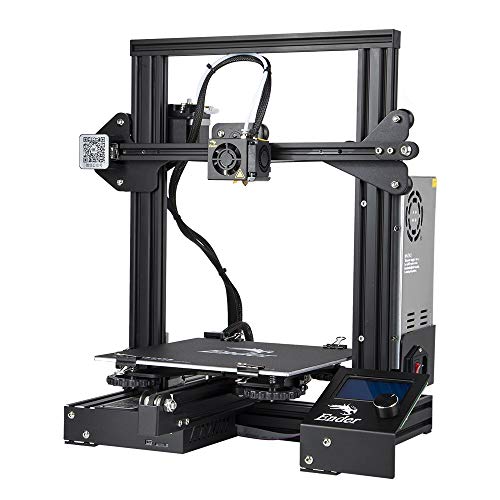
The Creality Ender 3 is a versatile option for fabric printing beginners, offering resume printing function to recover from power outages without losing progress. As an open-source printer, it supports extensive customization which is valuable for fabric design experimentation. It requires around two hours for assembly, providing hands-on experience with printer components. Its upgraded extruder reduces clogging, delivering smoother prints—important for maintaining fabric detail precision.
3D Printers Tina2 Basic for Home and Educational Use

The Tina2 Basic is a ready-to-use 3D printer ideal for beginners and kids. It comes fully assembled and equipped with automatic leveling and a removable magnetic platform, facilitating easy print removal after fabric or flexible material projects. Its compact design fits home setups and classrooms, supporting educational fabric printing tasks. The model also supports resume printing, mitigating disruptions during intricate fabric pattern printing.
YAOHUOO 2-Tier Desktop Printer Stand with Fabric Drawer

This 2-tier printer stand by YAOHUOO offers a perfect workspace organizer for 3D printers used in fabric printing. It measures 17.3″ deep and 11.8″ wide, with a middle usage space of 11.8″ tall, suitable for holding two printers or related equipment. The integrated fabric drawer provides hidden storage for tools and materials, helping keep your workspace tidy. Its multi-use design also functions as a small bookshelf or side table, improving compact office setups.
3D Printer Table with Filaments Storage by AHOWPD

The AHOWPD 3D Printer Table offers an all-in-one workstation supporting fabric printers. It features a spacious tabletop for the 3D printer and dual-level racks for filament spools, ensuring neat and accessible storage. Built-in power strip with AC outlets and USB ports enhances convenience by powering multiple devices. The high-quality metal frame provides durability and stability, making it ideal for long hours of fabric printing and continuous filament management.
Buying Guide for Choosing the Best 3D Printer and Stands for Fabric
Selecting the right 3D printer and stand for fabric projects requires attention to several important factors to maximize print quality and workspace efficiency.
Printer Performance and Features
- Automatic Bed Leveling: Ensures flawless first layer adhesion, critical when printing complex fabric items.
- Print Speed and Precision: Faster speeds reduce time but maintain detail, especially necessary for intricate fabric designs.
- Resumable Printing: Protects against power interruptions to avoid print defects or material waste.
- Build Volume: Choose a printer with sufficient space to accommodate your fabric items or prototypes.
- Extruder Temperature and Compatibility: Make sure the printer supports flexible filaments or textiles.
Workspace Organization and Printer Stand
- Multi-tier Design: Allows placement of multiple printers or related equipment for multitasking.
- Storage Drawers: Fabric drawers or enclosed spaces help keep tools, filaments, and accessories organized out of sight.
- Durability and Stability: Stands with robust construction reduce wobble, vital for precise fabric printing.
- Integrated Power Options: Power strips built into stands increase convenience without cluttering outlets.
- Space Efficiency: Consider compact designs if working in limited home or studio spaces.
Additional Considerations
- Ease of Assembly and Use: Especially for beginners, printers that come preassembled or with simple setup reduce frustration.
- Portability: Lighter portable models support flexible workspace changes.
- Open Source vs. Proprietary: Open-source printers provide customization potential for fabric printing experimentation.
- Support and Community: Popular 3D printer brands often offer better user support and modding communities.