Choosing the right eco friendly 3D printer filament is essential for both environmental sustainability and achieving high-quality print results. This article highlights some of the best environmentally conscious filaments available, emphasizing biodegradable materials, smooth finishes, and easy printability. Below is a summary table of the top 5 selected eco friendly filaments to help you compare their key features at a glance.
| Product | Brand | Key Features |
|---|---|---|
| Bamboo Lab PLA Matte Filament (Ash Gray) | TEWIRROW | Matte finish, RFID for automatic print settings, beginner-friendly |
| Official Creality PETG Filament, Black | Yoopai | Odorless, strong toughness, moistureproof, high precision |
| MarsWork PLA Filament Refill, Black | MarsWork | Refill packaging, vacuum sealed, premium smooth printing |
| ELEGOO Wood PLA Filament | ELEGOO | Real wood fibers, natural wood-like finish, dimensional accuracy |
| SUNLU PLA Filament, Black | SUNLU | Neatly wound, no clogs or bubbles, wide compatibility |
Bamboo Lab 1.75MM PLA Matte Filament with RFID
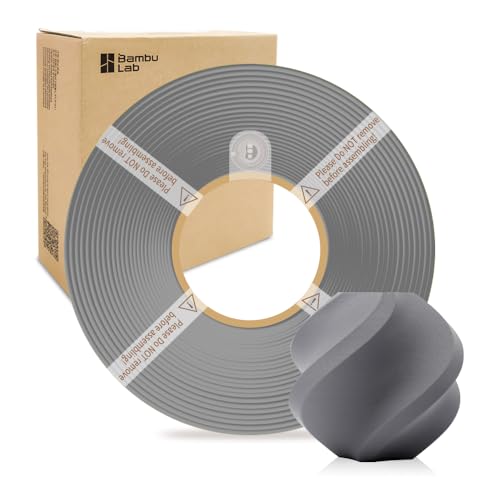
This Bamboo Lab PLA Matte filament offers a smooth, frosted matte finish that effectively hides layer lines for a professional print appearance. It is easy to print, making it ideal for beginners with no need for advanced printer adjustments. A unique feature is its RFID chipped spool-free design, letting printers automatically select optimal print parameters via the Automatic Material System. This eco friendly PLA filament emphasizes consistency and speed, compatible with Bambu Lab models like P1P, P1S, and X1 series. The Ash Gray color adds a sleek, modern touch to your prints.
Official Creality PETG 3D Printer Filament – Black

The Creality CR-PETG filament blends the strengths of PLA and ABS, providing an eco-friendly, odorless, and durable printing material. It boasts strong toughness preventing cracking or warping during prints. Recommended print temperatures are 220-250°C with a build plate temperature of 70-80°C for best results. The filament spool is tightly wound using mechanical winding to reduce tangles and snapping. This filament suits users looking for a tougher alternative to PLA with reliable flow and moisture resistance.
MarsWork PLA Filament 1.75mm Refill for Bambu Lab

MarsWork offers a premium PLA filament refill designed for Bambu Lab 3D printers, ensuring excellent compatibility and high-speed printing capability. The packaging reduces plastic waste by supporting reusable spools, making it an environmentally conscious choice. This filament undergoes vacuum-sealing and drying processes to minimize moisture, which reduces issues like bubbles, stringing, and clogging. It delivers consistent smooth extrusion suitable for professional and enthusiast levels alike.
ELEGOO Wood PLA Filament with Real Wood Fibers

The ELEGOO Wood PLA filament is infused with real wood fibers, delivering a natural wood-like finish perfect for models needing authentic texture such as decorations or architectural prints. This filament maintains strict dimensional accuracy of ±0.02mm, allowing for stable and smooth printing performance. Its spool is carefully wound to reduce tangles and filament breakage, providing consistent flow and user-friendly usage with most FDM printers.
SUNLU PLA 3D Printer Filament Black 1.75mm

SUNLU’s PLA filament is highly reliable and versatile, making it a favorite among beginners and skilled users. It offers excellent layer adhesion, no bubbling, clogs, or tangling issues. The filament spool is produced using a self-developed winding device to ensure neatness and prevent jams during printing. It maintains dimensional accuracy within ±0.02mm, compatible with nearly all 1.75mm FDM 3D printers.
Buying Guide for Eco Friendly 3D Printer Filaments
When selecting eco friendly 3D printer filament, consider the following key factors to ensure optimal printing results while minimizing environmental impact:
- Material Type: PLA and PETG are popular biodegradable or recyclable choices with different strengths. PLA is easier to print and compostable, while PETG offers enhanced toughness but slightly less eco-friendly.
- Print Finish and Texture: Matte, glossy, or specialty textures such as wood fiber can add aesthetic value depending on your project needs.
- Compatibility: Verify the filament diameter (commonly 1.75mm) and check if it suits your 3D printer brand and model. Some filaments are optimized for specific printers.
- Dimensional Accuracy: Filaments with a tight diameter tolerance (±0.02mm or better) reduce the risk of clogging and offer consistent extrusion for finer print details.
- Packaging Sustainability: Look for refill packaging or reusable spool options to reduce plastic waste.
- Ease of Printing: Eco friendly filaments should ideally print with minimal setup, no warping, and consistent feeding — especially important for beginners.
- Special Features: RFID chips or moisture-proof vacuum sealing can enhance user convenience and filament longevity.
By evaluating these aspects, you will make a more informed choice that balances print quality and environmental responsibility.