Finding the best flexible 3D printer resin means balancing softness, durability, and precision to create prints that withstand bending and stress. This guide showcases top flexible resins ideal for a variety of applications—from soft wearable parts to tough prototypes. Below is a summary table capturing each resin’s key features to help compare their flexibility, impact resistance, and unique strengths.
| Product | Shore Hardness | Weight | Key Feature | Brand |
|---|---|---|---|---|
| Superflex 3D Printer Resin (Clear) | 80A | 500g | Fast printing, balanced softness and strength | 3DMaterials |
| SUNLU Flexible 3D Printer Resin (Gray) | 66A | 2000g | High impact resistance and elongation | SUNLU |
| Siraya Tech Tenacious Resin (Obsidian Black) | N/A | 1kg | Ultra high toughness; bend 180° without breaking | Siraya Tech |
| Inslogic Flexible Resin (Black) | 70A | 1kg | Rubber-like elasticity and tear resistance | Inslogic |
| ANYCUBIC Tough Resin 2.0 (Grey) | N/A | 1kg | Upgraded flexural strength and low-odor formula | ANYCUBIC |
Superflex 3D Printer Resin by 3DMaterials (Clear)
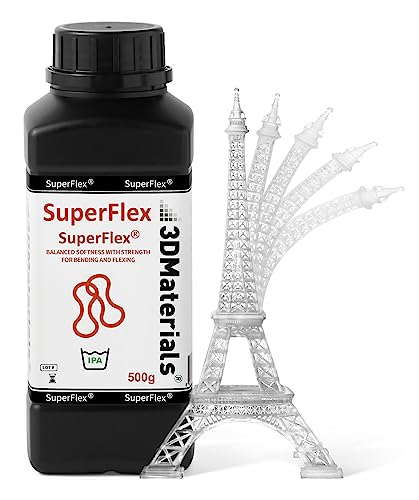
Superflex resin offers an 80A Shore hardness that simulates flexible rubber or TPU, ideal for designing hard flexible prototypes. It features fast printing speeds—achieving 50 micron layer prints in just 1.7 seconds on monochrome LCD printers, saving time and energy. This resin boosts productivity by at least 40%, perfect for demanding print farms.
The material balances notable softness with strength, allowing for prototypes that require resilience with flexible characteristics. It’s an excellent choice for those needing reliable flexible prints without sacrificing durability or workflow efficiency.
SUNLU Flexible 3D Printer Resin 2KG (Gray)
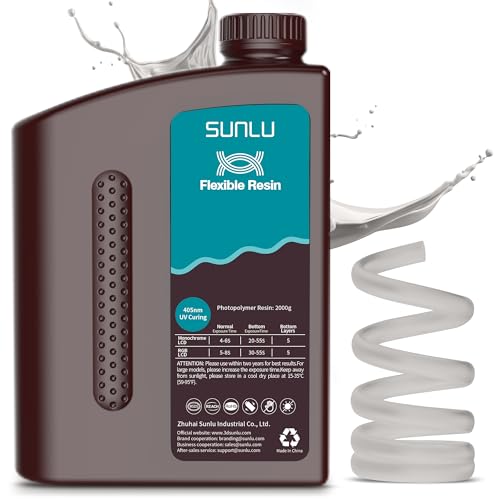
This SUNLU flexible resin offers a 66A Shore hardness with 135% elongation at break, delivering a perfect balance of softness and strength. It’s designed to simulate rubber-like flexibility while maintaining durability.
SUNLU’s formulation boasts high impact resistance, enabling printed parts to withstand drops and physical stress without cracking or breaking. Its flexible yet tough nature makes it suitable for soft items requiring bendability without brittleness.
Siraya Tech Tenacious Flexible Resin (Obsidian Black)
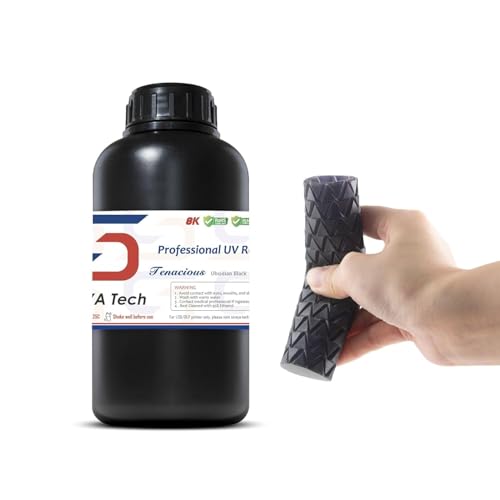
Siraya Tech’s Tenacious resin stands out for its high impact resistance and toughness. It is the toughest resin in their lineup, able to bend thin prints 180° without breaking. This makes it highly suitable for flexible yet durable parts that must endure repeated stress.
The resin is also popular as an additive to enhance strength and elasticity when mixed with other standard resins, reducing their fragility and improving longevity. It is compatible with 405nm UV curing and designed for LCD, DLP, and high-resolution 8K printing.
Inslogic Flexible 70A Resin (Black)
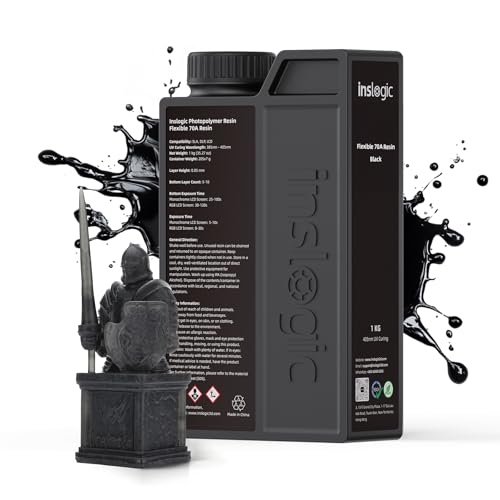
The Inslogic flexible resin presents a rubber-like Shore 70A elasticity, making it suitable for parts needing a soft, bendable, and durable material. This resin excels in tear resistance, making delicate or detailed prints resilient over long-term use.
Designed to endure repeated bending, twisting, and compression without permanent deformation, it works well for wearable parts or moving components where flexibility and toughness are critical.
ANYCUBIC Tough Resin 2.0 (Grey)

ANYCUBIC’s Tough Resin 2.0 shines for its upgraded flexural strength and flexibility. It resists breakage, cracking, and peeling, even in thin or miniature models subject to cyclic vibrations or drops.
Featuring a low-odor, non-irritating formula, it offers a more comfortable printing environment while maintaining high-quality output for intricate parts. This resin is eco-friendly with reduced volatile organic compounds, an advantage for professional and home use.
Buying Guide for Flexible 3D Printer Resin
Choosing the right flexible resin depends on several key factors. Understanding these aspects helps select the best material for your specific 3D printing needs.
Shore Hardness and Flexibility
The Shore hardness scale measures resin softness: lower values (around 60A-70A) yield softer, more rubber-like parts, while higher values (80A and above) produce harder, TPU-like flexibility. Consider the application—wearables and seals benefit from softer resins, while prototypes requiring shape retention may need firmer flexibility.
Impact Resistance and Durability
Look for resins that advertise high impact resistance and tear strength if your prints will experience bending, drops, or constant movement. Some formulations excel by maintaining toughness over time and resisting brittleness even after extended use or environmental stress.
Curing Speed and Printing Efficiency
Faster curing resins reduce layer times, boosting productivity especially for large print batches. Monochrome LCD-compatible resins often cure quicker, helping to save overall print time and energy consumption.
Compatibility and Additive Use
Ensure the resin works with your printer’s wavelength (usually 405nm for flexible resins) and consider if the resin can be mixed with others to improve elasticity or strength. Some resins are specifically designed to act as additives to tweak the mechanical performance of your prints.
Print Detail and Surface Finish
For high-resolution prints requiring fine detail—such as figurines and miniatures—choose resins that maintain clarity and sharpness while being flexible. Certain formulations also minimize adhesion to FEP films to reduce print defects and simplify post-processing.
Environmental and Sensory Considerations
Low-odor and non-irritating resins enhance user comfort during printing, especially in enclosed spaces. Additionally, environmentally friendly or low VOC formulations are a plus for sustainability-conscious users.
Color and Appearance
Flexible resins come in various colors, including clear, black, grey, and others. Choose one that fits the aesthetic or functional needs of your project.
By weighing these factors in relation to your use case—whether prototyping, wearable accessories, durable miniatures, or flexible mechanical parts—you can find the best flexible 3D printer resin tailored for your 3D printing projects.