Industrial thermal inkjet printers are essential for efficient, high-quality printing in manufacturing, logistics, retail, and small business environments. These printers provide versatile, durable printing solutions for labels, barcodes, batch numbers, dates, and more, often without the need for ink or toner. Below is a summary of top-rated industrial thermal inkjet printers and label solutions tailored to meet a range of production and shipping needs.
| Product | Brand | Key Features |
|---|---|---|
| HP Direct Thermal Label Printer with Ethernet Connection | HP | Ink-free direct thermal printing, supports label rolls up to 5″, 203 or 300 DPI resolution |
| Phezer 0.5inch Automatic Online Inkjet Coding Machine | Phezer | Prints text, logos, barcodes on diverse materials, high-speed up to 70 m/min, multi-language support |
| BENTSAI B85 Wide Format Handheld Inkjet Printer | BENTSAI | Wide 4″ print height, multi-surface printing, 300 DPI, refillable ink options |
| MUNBYN Bluetooth Thermal Label Printer RW403B | MUNBYN | Wireless connectivity, compatible with multiple platforms, durable with near-zero jam rate |
| PEKOKO LB100S Intelligent Portable Handheld Thermal Inkjet Printer | PEKOKO | Portable handheld coding, prints on curved and uneven surfaces, supports QR codes and barcodes |
HP Direct Thermal Label Printer with Ethernet Connection

The HP Direct Thermal Label Printer offers ink-free, direct thermal printing, eliminating the need to manage ink or toner supplies. It supports USB and Ethernet connections and is compatible with major shipping platforms, making it ideal for warehouses and small businesses. Its built-in label roll compartment accommodates rolls up to five inches wide, and a rear label feeder supports industrial-grade fanfold labels.
Available in 203 or 300 DPI, this printer produces crisp, detailed labels up to 5 inches wide. Adjustable media holders enable easy switching between various label types, such as mailing and shipping labels, ensuring versatility and precise output for business labeling needs.
Phezer Automatic Online Inkjet Coding Machine

The Phezer 0.5inch Automatic Inkjet Coding Machine is designed to streamline production line printing. It supports text, date, logo, barcode, and other variable data in 23 languages. Controlled printing triggers within 10 milliseconds allow a maximum speed up to 70 meters per minute, outperforming many competitors in throughput.
This system prints on a range of materials including paper, metal, glass, plastic, stone, and fabric, making it highly versatile across industries. The use of original HP ink cartridges ensures high-quality, sharp prints suitable for demanding industrial environments.
BENTSAI B85 Wide Format Handheld Inkjet Printer

The BENTSAI B85 handheld printer features a 4-inch tall print height with four individual print heads each printing 1 inch tall characters. It can simultaneously print large texts, QR codes, barcodes, and batch numbers at up to 300 DPI resolution and print speeds of 10 meters per minute.
Its versatile application suits marking on porous and non-porous materials including carton, packaging, electronics, and construction materials. The machine uses fast-drying EB22B-L ink cartridges with refillable water-based ink options to lower printing costs on porous surfaces.
MUNBYN Bluetooth Thermal Label Printer RW403B

The MUNBYN RW403B is a wireless thermal label printer optimized for small business shipping needs. With Bluetooth connectivity, it connects effortlessly to Android, iPhone, Windows, Mac, and Chromebook devices. No driver installation is required and it supports popular shipping platforms such as FedEx, UPS, USPS, Amazon, Shopify, Etsy, and eBay.
Engineered for durability, it prints up to 970,000 labels with a near-zero jam rate of less than 0.01%, boosting productivity while reducing waste. Its DAC dynamic algorithm chip delivers automatic label calibration to minimize misalignment for precise, professional packaging labels.
PEKOKO LB100S Portable Handheld Thermal Inkjet Printer
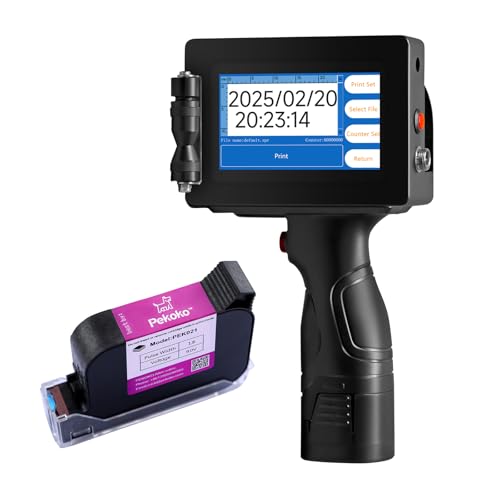
The PEKOKO LB100S is a smart handheld thermal inkjet printer designed for portable, flexible coding needs. It prints sharp text, serial batch numbers, symbols, QR codes, barcodes, pictures, and expiration or production dates on a variety of surfaces including cartons, wood, metal, glass, plastic, and clothing.
With 360° printing capabilities and assistive positioner tools available, it performs well even on curved and uneven surfaces. This printer is well-suited for industrial manufacturing, logistics, retail, and design workshops, providing versatile coding and marking solutions.
Buying Guide for Industrial Thermal Inkjet Printers
Choosing the best industrial thermal inkjet printer depends on the specific needs of your business or production environment. Consider the following key factors:
Printing Technology and Ink Type
- Direct Thermal vs. Thermal Inkjet: Direct thermal printers do not require ink or toner, reducing consumable costs but are more suited for short-term labels. Thermal inkjet printers use ink cartridges and provide sharp, durable prints that endure longer environmental exposure.
- Ink Compatibility: Check if the printer uses standard cartridges (e.g., HP original ink) for consistent print quality and availability.
Print Resolution and Size
- DPI (Dots Per Inch): Higher DPI (300+ DPI) delivers clearer, detailed images and barcodes, essential for compliance and readability in logistics and industrial environments.
- Printable Area: Consider the maximum label width or print height to match your labeling requirements, whether small postage labels or large batch codes.
Speed and Throughput
- Print Speed: Evaluate the maximum printing speed (measured in meters per minute or labels per minute) to ensure it aligns with your production or shipping volume.
- Automation Capabilities: For high-volume lines, automatic printing triggered by conveyor sensors can enhance efficiency and reduce manual labor.
Connectivity and Compatibility
- Connectivity Options: USB, Ethernet, Bluetooth, and wireless options provide flexibility depending on your setup.
- Software and Platform Support: Verify compatibility with your shipping platforms or label design software (e.g., FedEx, UPS, Shopify) to streamline workflow integration.
Material and Surface Compatibility
- Ensure the printer supports the materials you work with (paper, plastic, metal, fabric, etc.) and that it can print on smooth, curved, or uneven surfaces if needed.
Portability and Form Factor
- Handheld or portable printers offer flexibility for on-the-go marking, useful in warehouses or production lines with variable labeling locations.
- Desktop or integrated systems may be better suited for fixed production lines with high-volume needs.
Durability and Reliability
- Look for printers designed for industrial environments, with features such as jam reduction, durable build, and long-lasting print heads or cartridges to minimize downtime.
Cost Considerations
- Balance initial printer costs with consumable expenses like ink and label rolls. Thermal printers without ink may have higher media costs but reduced maintenance.
- Consider the total cost of ownership including maintenance, servicing, and operational efficiency gains.
By carefully weighing these factors and selecting a thermal inkjet printer that matches your production scope, materials, and operational workflow, you can enhance your industrial printing efficiency and product labeling standards.