Choosing the right plant-based 3D printer resin is crucial for eco-conscious makers seeking high precision, low odor, and sustainable printing materials. Below is a summary table of top-rated plant-based resins designed for LCD, MSLA, DLP, and SLA 3D printers. This guide compares their key features, including curing speed, toughness, odor level, and compatibility for diverse projects.
| Product | Brand | Key Features | Weight |
|---|---|---|---|
| ANYCUBIC 3D Printer Resin 2.0 Grey | ANYCUBIC | Low odor, rapid curing, eco-friendly soybean oil base, high precision | 1 kg |
| ELEGOO ABS-Like Plant-Based Resin Grey | ELEGOO | Low shrinkage, high toughness, ultra-low odor, broad compatibility | 2 kg |
| ANYCUBIC Rapid UV Plant-Based Resin Grey | ANYCUBIC | Safe soybean oil base, fast curing, consistent color, low odor | 1 kg |
| ELEGOO Standard Plant-Based Resin Grey | ELEGOO | Non-BPA, accurate detailing, low brittleness, ultra-low odor | 1 kg |
| UNIFORMATION HD Plant-Based 3D Resin Grey | Uniformation | Highly detailed prints, fast curing, low viscosity, reduces waste | 1 kg |
ANYCUBIC 3D Printer Resin 2.0, 405nm Plant-Based Rapid Resin 2.0, Low Odor, Photopolymer Resin for LCD 3D Printing,1kg Grey

This ANYCUBIC 3D Printer Resin 2.0 is designed with soybean oil as the main raw material, making it environmentally friendly with an ultra-low odor suitable for home and office use. It offers excellent color purity and vivid model effects. The resin features high-speed solidification, shortening curing time while resisting excessive shrinkage for amazing precision and smooth results. The formula complies with EN 71-3 safety standards and contains no BPA or irritating chemicals, making it safe and user-friendly for detailed LCD 3D printing applications.
ELEGOO ABS-Like Plant-Based 3D Printer Resin with Low Odor and High Precision, 405nm UV Curing Resin for Mars Saturn Jupiter MSLA DLP LCD 3D Printing – Grey 2000g

The ELEGOO ABS-Like Plant-Based Resin combines a primarily soybean-based formula with formulation aimed to deliver non-BPA and ultra-low odor printing experience. It boasts great toughness and low brittleness, offering printed models robust durability with a shrinkage rate as low as 3.72%. This ensures high fidelity and detail accuracy in both miniatures and industrial parts. Compatible with various 405nm UV UV curing machines like Mars, Saturn, and Jupiter series, it’s valued for wide usability across multiple MSLA, DLP, and LCD 3D printers.
ANYCUBIC 3D Printer Resin with Low Odor and Safety, 405nm UV Plant-Based Rapid Resin 2.0 with High Precision and Quick Curing for LCD 3D Printing (Grey, 1000g)
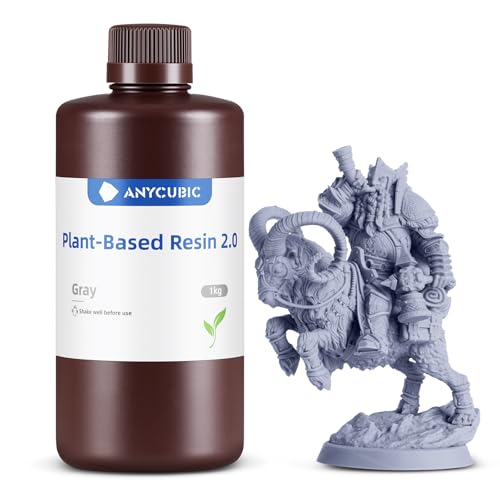
This resin leverages soybean oil base and complies with EN 71-3 safety standards ensuring a safer, low odor printing environment with no BPA. It provides quick curing at 405nm UV wavelength and high precision for detailed models. The resin contains high-quality pigments for richer and consistent colors; however, thorough mixing before printing is recommended to avoid uneven coloring. Curing speed is optimized specifically for Anycubic Photon series, with bottom layer exposure times of 60-80 seconds and normal exposure times about 8-10 seconds.
ELEGOO Standard Plant-Based 3D Printer Resin with Low Odor, 405nm UV Curing Photopolymer Resina for Mars Saturn Jupiter MSLA DLP LCD Impresora Grey 1000g

ELEGOO’s standard plant-based resin is mainly derived from soybean oil, offering non-BPA, low odor printing without irritating fumes. It ensures great toughness and high precision for fine details and consistent model performance with a low shrink rate of 3.72%. Broad printer compatibility includes Mars, Saturn, and Jupiter 3D printers utilizing 405nm curing light, applicable to both hobbyist models and professional-grade industrial components.
UNIFORMATION HD 3D Printer Resin Standard Fast UV Curing Plant-Based 3D Resin Liquid with High Precision Low Viscosity Suit for SLA/LCD/DLP Printing Miniatures, Garage Kits, HD Grey 1KG

The UNIFORMATION HD Plant-Based Resin excels with high precision and detail reproduction, effectively capturing sharp edges and tiny patterns. Its low viscosity enhances printing efficiency by absorbing UV light quickly, significantly reducing curing times. Strong build plate adhesion improves print success rates and reduces wasted resin, making it economical as well as environmentally conscious for SLA, LCD, and DLP printing applications.
Buying Guide for Plant-Based 3D Printer Resins
Selecting the best plant-based resin involves multiple considerations to ensure optimal print results, environmental benefits, and user safety.
1. Material Composition and Safety
Look for resins that use plant oils like soybean oil as their base. These resins typically emit lower fumes and odors and avoid harmful substances like BPA. Check for compliance with safety standards such as EN 71-3 to guarantee toxicity levels suitable for home or educational use.
2. Compatibility with 3D Printers
Ensure the resin is compatible with your printer’s technology—whether LCD, MSLA, DLP, or SLA. Most plant-based resins cure under 405nm UV light, but verifying specific model support helps prevent printing errors.
3. Curing Speed and Exposure Times
Faster curing resins help reduce printing time but require precise exposure settings. Some brands, like ANYCUBIC and UNIFORMATION, optimize exposure parameters for quicker layer solidification without compromising precision or model integrity.
4. Precision, Toughness, and Shrinkage
Printing accuracy matters for detailed models. Choose resins with low shrinkage (around 3.7% or less) and enhanced toughness or tenacity to reduce brittleness. ABS-like plant-based resins offer durability suitable for functional prototypes.
5. Odor and Environmental Impact
Low odor printing resins minimize respiratory discomfort, especially in closed or small rooms. Prioritize plant-based, biodegradable options to reduce environmental footprint compared to petroleum-based resins.
6. Viscosity and Waste Reduction
Lower viscosity resins improve fluid flow and adhesion on the build plate, reducing failed prints and wasted material. This aspect contributes to smoother layer formation and cost efficiency.
7. Color Quality and Transparency
If your projects require colorful or translucent models, consider resin pigment quality and clarity. Some resins include high-grade pigments for vivid or clear finishes resistant to yellowing over time.