Best 3D Printers to Buy for High-Speed and Precise Printing
Choosing the best 3D printer can elevate your creative projects, rapid prototyping, or educational activities with precision and efficiency. This guide highlights top-rated 3D printers suited for various users, from beginners to professionals, emphasizing speed, reliability, and print quality. Below is a comparative summary of selected models to streamline your decision-making process.
| Model | Key Features | Build Volume | Speed |
|---|---|---|---|
| Creality Ender 3 | Resume printing after power outage, advanced extruder, semi-assembled | 8.66 x 8.66 x 9.84 in | Standard |
| FLASHFORGE Adventurer 5M | Auto-leveling, CoreXY, 600mm/s speed, 280°C nozzle | 8.7 x 8.7 x 8.7 in | Up to 600mm/s |
| FLASHFORGE AD5M Pro | Quiet printing, auto calibration, HEPA filter, CoreXY | 8.7 x 8.7 x 8.7 in | Up to 600mm/s |
| Creality K1 SE | 600mm/s CoreXY, flagship extruder, quick-swap tri-metal nozzle | Not specified | Up to 600mm/s |
| Tina2 Basic | Fully assembled, auto leveling, compact, easy for beginners | 3.93 x 4.13 x 3.94 in | Standard beginner speed |
Official Creality Ender 3 3D Printer Fully Open Source
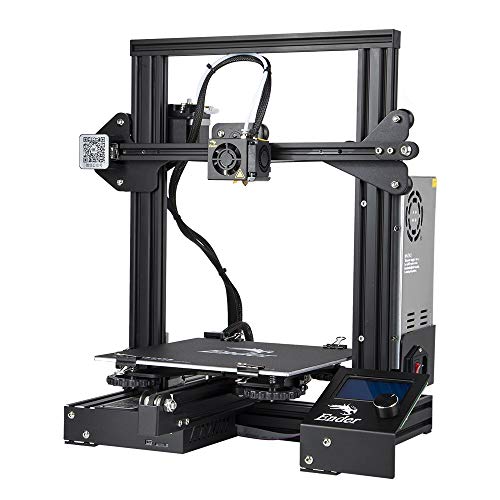
The Creality Ender 3 offers a DIY build experience with several pre-assembled components suitable for beginners aiming to enhance their skills. Its resume printing function is invaluable, allowing prints to continue after unexpected power outages, avoiding wasted materials and time. The upgraded extruder reduces clogging, ensuring smooth extrusion during operation. The V-shape with POM wheels enables silent, smooth, and durable motion, providing a reliable printing process. Build volume is a practical 8.66 x 8.66 x 9.84 inches, making it well-sized for a variety of projects.
FLASHFORGE Adventurer 5M with Fully Auto Leveling

The Adventurer 5M from FLASHFORGE excels with one-click automatic printing, saving time and eliminating manual calibration errors by using an automatic bed leveling system. Its Core XY mechanical structure supports ultra-fast printing speeds reaching 600mm/s with exceptional acceleration, optimized for professional rapid prototyping and small-scale production. The detachable nozzle system and quick warm-up enable efficient operation. Its 220x220x220mm build area suits versatile creative and engineering applications.
FLASHFORGE AD5M Pro 3D Printer with Quiet Operation

This model advances the Adventurer 5M with added features like a fully enclosed structure and dual filtration, including HEPA13 and activated carbon filters for improved air quality, particularly beneficial for home or classroom environments. The printer operates at noise levels ≤ 50dB, with a low-speed silent mode for distraction-free work. Its automatic calibration ensures flawless initial layers by precisely measuring and adjusting the Z-axis. The device supports rapid production with precise and consistent results.
Creality K1 SE High-Speed 3D Printer with Auto Leveling

The Creality K1 SE offers remarkable speed with its CoreXY system, printing up to 600mm/s, which is 12 times faster than typical printers. It maintains high precision while rapidly producing models. Its flagship extruder includes a side spring and ball plunger to ensure consistent filament feeding, compatible with regular and flexible TPU filaments. The printer also features a quick-swap tri-metal nozzle and ceramic heater, achieving fast heats-up to 300°C for materials like ABS, making it ideal for demanding prints requiring durability and precision.
3D Printers Tina2 Basic Fully Assembled and Auto Leveling

The Tina2 Basic is a user-friendly, fully assembled 3D printer perfect for kids and beginners. It requires minimal setup and includes a TF card with sample models, enabling users to start printing immediately. With a compact design and lightweight nature, it is easily portable, making it suitable for classrooms or small workspaces. It offers a 100x105x100mm build volume with a removable magnetic platform and supports resume printing. Its simplicity and precision make it an accessible introduction to 3D printing for education and hobby use.
Buying Guide for Selecting the Best 3D Printer
When choosing a 3D printer, several factors should be considered to match your specific needs and ensure satisfying results.
1. Printing Speed and Precision
High printing speeds, such as those found in CoreXY-equipped models, can significantly reduce production time. However, speed should not compromise precision. Look for printers supporting acceleration and velocity that maintain detailed layering at fast speeds, especially for professional or prototyping purposes.
2. Build Volume and Print Size
Consider the maximum build volume according to the size of your projects. Hobbyists and beginners may prefer smaller volumes for simple models, while professionals might require larger volumes for complex or assembly parts. Common volumes range from under 4 inches cubic for mini desktop printers up to 9 inches cubic for more versatile models.
3. Ease of Use and Setup
Beginners benefit from printers that come fully assembled or partially assembled with straightforward setup instructions. Features like automatic bed leveling, resume printing after power interruptions, and intuitive user interfaces improve the user experience and reduce errors.
4. Material Compatibility and Extruder Quality
Check for the types of filaments supported (PLA, ABS, TPU, etc.) and the extruder design. Reliable filament feeding mechanisms with clog resistance improve print consistency. Quick-swap nozzles and high-temperature hotends expand material options for advanced users.
5. Noise Levels and Environment
If printing in shared spaces such as classrooms or homes, consider models with noise-reduction features, quiet modes, or enclosed designs with air filtration to reduce odors and particle emissions for healthier indoor air quality.
6. Additional Features
Extras such as touchscreen controls, Wi-Fi connectivity, remote app control, multi-color or multi-material printing capability, and built-in cameras enhance convenience and creative opportunities, particularly in educational or collaborative environments.
By evaluating 3D printers across these perspectives, buyers can ensure an optimal match of technology, usability, and functionality tailored to their project demands and skill levels.